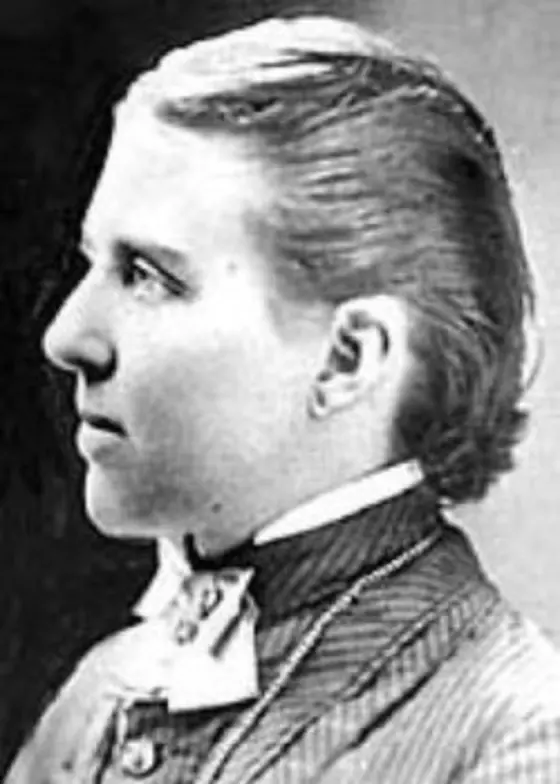
How Arabella Mansfield Opened the Iowa Bar to Women in 1869
Arabella Mansfield was admitted to the Iowa bar on June 1, 1869, becoming the first woman licensed to practice law in the United States. She was 23 years old. She had read law in her brother-in-law's office in Mount Pleasant, Iowa, as was the standard path to bar admission at the time, and passed the examination with marks the examiners described as exceptional.
The Iowa Code governing bar admission used the word "male" to describe eligible applicants. Judge Francis Springer, who administered her examination in Henry County, Iowa, ruled that the statute should be interpreted broadly to include women. The following year, the Iowa General Assembly formally amended the code in 1870 to remove gender restrictions from bar admission requirements.
Mansfield never argued a case in court. She spent her entire career as an educator and academic administrator. But her admission cracked open a door that Belva Lockwood, Charlotte Ray, Florence Allen, and thousands of other women would walk through in the decades that followed.
Education and Early Life in Burlington and Mount Pleasant, Iowa
Born Belle Aurelia Babb on May 23, 1846, in Burlington, Iowa, Mansfield grew up on the Iowa frontier. Her father died when she was young, and she and her brother worked to support the family while attending school. Burlington, situated in Des Moines County on the Mississippi River, was one of Iowa's largest cities in the mid-nineteenth century.
She enrolled at Iowa Wesleyan University in Mount Pleasant, one of the few coeducational institutions in the country at the time. She graduated in 1866. She then married John Mansfield, a fellow Iowa Wesleyan student, and the couple studied law together in the office of her brother-in-law, a practicing attorney in Mount Pleasant.
Both John and Arabella applied to take the Iowa bar examination. He passed. She passed with higher marks. The only legal obstacle was the statute's gendered language, and Judge Springer resolved it by ruling that "male" should be read to include all persons.
The Legal Barriers Women Faced: Bar Admission Statutes and Bradwell v. Illinois
Mansfield's admission was an exception, not a trend. Most states continued to exclude women from legal practice for years after 1869. Bar admission statutes across the country used gendered language, and courts consistently interpreted those terms to exclude women from the profession.
In 1873, the United States Supreme Court upheld Illinois's refusal to admit Myra Bradwell to the state bar in Bradwell v. Illinois. Myra Bradwell had founded the Chicago Legal News in 1868 and passed the Illinois bar examination, but the state supreme court denied her application. The US Supreme Court affirmed that denial. Justice Joseph Bradley, in a concurring opinion joined by two colleagues, wrote that "the natural and proper timidity and delicacy which belongs to the female sex evidently unfits it for many of the occupations of civil life." The majority rested its decision on the Fourteenth Amendment grounds, holding that the right to practice law was not a privilege of national citizenship.
Charlotte Ray became the first Black woman admitted to the bar in 1872, in Washington, D.C., after graduating from Howard University School of Law. Belva Lockwood became the first woman to argue before the United States Supreme Court in 1879, but only after she lobbied Congress to pass the Female Attorneys Act, which specifically granted women that right. Before the law changed, the Supreme Court had twice denied her admission to its bar.
Change came state by state and decade by decade. By 1920, women could practice law in most states, but they remained a small fraction of the profession. As late as 1970, women made up only about 3% of all practicing lawyers in the United States, according to American Bar Association data.
Arabella Mansfield's Career at Iowa Wesleyan and DePauw University
After her bar admission, Mansfield returned to Iowa Wesleyan University as a professor of English and history. She taught there for nearly two decades, earning a reputation as one of the institution's most capable faculty members. She also became active in Iowa's growing women's suffrage movement, working alongside organizers pressing for women's right to vote.
In 1893, she and her husband relocated to DePauw University in Greencastle, Indiana, a Methodist institution that had been coeducational since its founding. She joined the faculty and was eventually appointed dean of the schools of art and music, one of the senior administrative positions on campus. She held that role until her death.
She died on August 1, 1911, in Aurora, Illinois, at age 65. She had opened the legal profession to American women without ever filing a brief or arguing before a judge. Iowa Wesleyan University named its law library the Arabella Mansfield Law Library in her honor.
Frequently Asked Questions
Who was the first woman lawyer in the United States?
Arabella Mansfield, admitted to the Iowa bar on June 1, 1869, by Judge Francis Springer in Henry County, Iowa.
Did Arabella Mansfield practice law?
No. Despite passing the Iowa bar examination with exceptional marks, Mansfield chose a career in teaching and university administration at Iowa Wesleyan University and DePauw University.
Who was the first woman to argue before the Supreme Court?
Belva Lockwood, in 1879, after she lobbied Congress to pass the Female Attorneys Act granting women that right. She had been denied admission to the Supreme Court bar twice before the law changed.
What percentage of lawyers are women today?
About 40% of all US lawyers are women as of 2024, according to the American Bar Association. Women have formed the majority of American law school students since 2016.
Why could women not practice law before 1869?
Bar admission statutes in most states used the word "male" to describe eligible applicants, and courts interpreted that language to exclude women entirely. Judge Francis Springer in Iowa broke the pattern in 1869 by ruling that the word "male" in Iowa's bar statute should be read broadly to include all persons.
Who was the first Black woman admitted to the bar?
Charlotte Ray, who graduated from Howard University School of Law and was admitted to the bar in Washington, D.C., in 1872. She was the first Black woman to practice law in the United States.
What was Bradwell v. Illinois?
Bradwell v. Illinois (1873) was the United States Supreme Court case in which the Court upheld Illinois's refusal to admit Myra Bradwell to the state bar. Justice Joseph Bradley's concurring opinion argued that women were naturally unsuited to professional civil life. The decision remained a setback for women's legal rights for decades.