The Answer Is Complicated
There is no single "first woman to vote in the United States." The answer depends on how you define the question, because women's voting rights in America did not arrive in a single moment. They arrived in pieces, were sometimes revoked, and were denied to many women long after they were technically granted.
The most commonly cited answers:
- Lydia Taft (1756): Voted in a town meeting in Uxbridge, Massachusetts, likely the first American woman to cast an official vote.
- Women in New Jersey (1776-1807): The state constitution permitted "all inhabitants" meeting property requirements to vote. Women and free Black men voted for three decades before the law was changed in 1807 to restrict voting to white men.
- Louisa Ann Swain (September 6, 1870): First woman to vote under an equal suffrage law, casting her ballot in Laramie, Wyoming, after Wyoming Territory granted women's suffrage in 1869.
- Millions of women (August 26, 1920): The 19th Amendment was certified, prohibiting states from denying the right to vote based on sex.
Before the Movement: Women Who Voted Early
Lydia Taft voted at a Uxbridge, Massachusetts town meeting in 1756. She was a wealthy property owner whose husband had recently died, leaving her as the head of the household. Colonial-era voting was often tied to property ownership, and in some communities, widows or other property-holding women could participate in local governance. Taft voted at least three times in town meetings.
New Jersey's 1776 constitution was more explicit. It granted voting rights to "all inhabitants" who met a property and residency threshold, without specifying sex. Women voted in New Jersey elections for over 30 years. In 1807, the state legislature passed a new law restricting the vote to white male citizens, eliminating the voting rights of women, Black men, and non-citizens in one stroke.
The Organized Movement Begins
The modern women's suffrage movement in the United States traces its formal beginning to the Seneca Falls Convention, held July 19-20, 1848, in Seneca Falls, New York. Elizabeth Cady Stanton and Lucretia Mott organized the meeting. About 300 people attended.
Stanton presented the Declaration of Sentiments, modeled on the Declaration of Independence. It proclaimed: "We hold these truths to be self-evident: that all men and women are created equal." The most controversial resolution called for women's right to vote. It passed narrowly.
The movement grew through the 1850s and 1860s, but fractured after the Civil War over the 15th Amendment, which granted voting rights to Black men but not to women. Susan B. Anthony and Elizabeth Cady Stanton opposed the amendment for this reason. Frederick Douglass and others argued that Black male suffrage was urgent and could not wait. The split divided the movement for decades.
Wyoming Leads the Way
On December 10, 1869, Wyoming Territory passed the first law in the United States granting women the unconditional right to vote. The motivations were mixed: some legislators genuinely supported equal rights, others hoped to attract women settlers to the sparsely populated territory, and at least one voted yes believing the governor would veto it. The governor signed the bill.
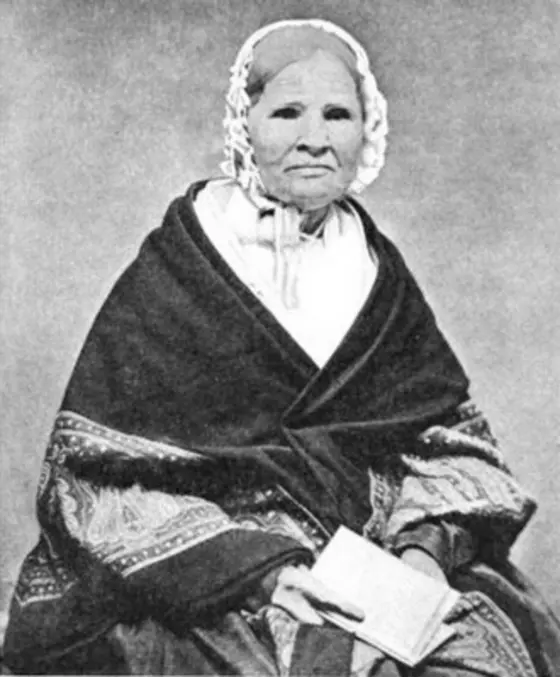
On September 6, 1870, Louisa Ann Swain, a 69-year-old grandmother, walked to the Laramie polls and cast her ballot in a general election. She is widely recognized as the first woman to vote under an equal suffrage law in the United States.
When Wyoming applied for statehood in 1890, Congress pressured the territory to drop women's suffrage as a condition of admission. Wyoming's legislature telegraphed back: "We will remain out of the Union one hundred years rather than come in without the women." Wyoming entered the Union with women's suffrage intact.
Susan B. Anthony and the Fight Intensifies
In November 1872, Susan B. Anthony voted in the presidential election in Rochester, New York. She was arrested two weeks later and charged with "illegal voting." At trial, the judge directed the jury to find her guilty (he had written the verdict before the trial began) and fined her $100. She refused to pay. The fine was never collected.
Anthony spent the next three decades campaigning for a constitutional amendment. She died in 1906, fourteen years before it was ratified. Her final public words were reported as: "Failure is impossible."
Alice Paul and the Final Push
In January 1917, Alice Paul and the National Woman's Party began picketing the White House, holding banners that read "Mr. President, how long must women wait for liberty?" They picketed six days a week for over two years.
When the United States entered World War I, the picketers were arrested for "obstructing traffic." Paul and others were sent to the Occoquan Workhouse in Virginia, where they were beaten, force-fed during hunger strikes, and held in solitary confinement. The brutality, once reported in the press, generated public sympathy for the suffrage cause.
The House passed the amendment in January 1918. The Senate followed in June 1919. Tennessee became the 36th state to ratify on August 18, 1920, providing the three-fourths majority needed. The 19th Amendment was certified on August 26, 1920.
Frequently Asked Questions
Who was the first woman to vote in the United States?
Louisa Ann Swain is recognized as the first woman to vote under an equal suffrage law, casting her ballot in Laramie, Wyoming on September 6, 1870. Earlier, Lydia Taft voted in a 1756 Massachusetts town meeting.
When did women get the right to vote in the United States?
The 19th Amendment was ratified on August 18, 1920, and certified on August 26, 1920. Wyoming Territory had granted women's suffrage in 1869.
Which state was first to give women the right to vote?
Wyoming Territory, on December 10, 1869.
Could Black women vote after the 19th Amendment?
Legally, yes. In practice, Jim Crow laws blocked most Black women in the South from voting until the Voting Rights Act of 1965.
How long did the women's suffrage movement take?
72 years, from the Seneca Falls Convention (1848) to ratification (1920).