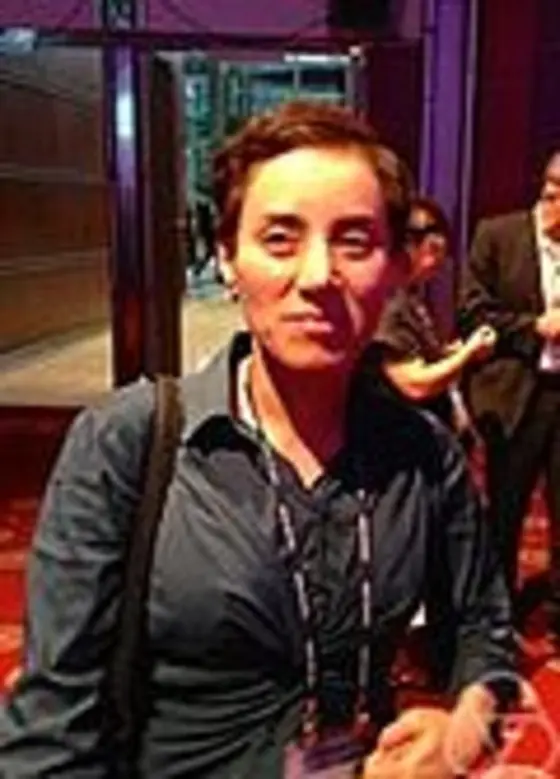
The Achievement
Maryam Mirzakhani became the first woman to win the Fields Medal in 2014. She received the award at the International Congress of Mathematicians in Seoul on August 13, 2014, at age 37. The Fields Medal is mathematics' highest honor, awarded every four years by the International Mathematical Union to mathematicians under 40. Mirzakhani was an Iranian-born mathematician and professor at Stanford University.
The Fields Medal was first awarded in 1936. It took 78 years before a woman won it.
The International Mathematical Union's citation described her work as "stunning advances in the theory of Riemann surfaces and their moduli spaces." She had been diagnosed with breast cancer in 2013. She continued working through treatment and accepted the medal in Seoul. She died on July 14, 2017, at Stanford Hospital, age 40.
As of 2026, only two women have won the Fields Medal in the prize's 90-year history: Mirzakhani in 2014 and Maryna Viazovska in 2022.
The Fields Medal and Its 78-Year Wait for a Woman Winner
The Fields Medal was established in 1936, when Canadian mathematician John Charles Fields organized funding for an international prize honoring outstanding mathematical achievement. The International Mathematical Union has awarded it every four years since, typically to two, three, or four recipients at each ceremony. One rule distinguishes it from most other major prizes: recipients must be under 40 years old. This restriction makes the Fields Medal a recognition of brilliance in progress, not a lifetime achievement award.
The Nobel Prize has no mathematics category. The Fields Medal and the Abel Prize fill that gap in different ways. The Abel Prize has no age restriction and functions more like a career capstone. The Fields Medal rewards mathematicians at peak productive age. For most of the mathematical world, the Fields Medal is the prize.
Through 2022, 64 Fields Medals had been awarded to 64 mathematicians. Two went to women. That is 3.1 percent.
The first award went to Lars Ahlfors and Jesse Douglas in 1936. The first woman to win one did so in 2014. The number that requires no editorial commentary: 78 years.
From Tehran Storyteller to Harvard Mathematician
Maryam Mirzakhani grew up in Tehran. As a child, she wanted to write novels. She read voraciously and imagined a career built around stories, not equations.
Her shift toward mathematics came through her brother. He had a habit of recounting puzzle problems he'd encountered, the kind of recreational mathematics that appears in magazines and competitions. Mirzakhani found herself drawn in. First with mild interest, then with something closer to obsession.
She attended a school in the National Organization for Development of Exceptional Talents system, known in Iran by its acronym NODET. These are selective, academically rigorous schools that draw students from across the country through competitive examination. The environment gave Mirzakhani the problems and the peers she needed.
From NODET, she attended Sharif University of Technology for her undergraduate degree, one of Iran's most selective technical universities. She then completed her PhD at Harvard University in 2004. Her advisor was Curtis McMullen, himself a Fields Medal recipient (1998). McMullen later noted that even though mathematicians had studied Riemann surfaces for 150 years, Mirzakhani found entirely new angles of attack.
In 2008, Mirzakhani joined the faculty at Stanford University as a professor of mathematics.
The IMO Years: Perfect Scores and a New Direction
The International Mathematical Olympiad is an annual competition for pre-university students, drawing the strongest young mathematicians from countries worldwide. Held since 1959, the IMO remains one of the most reliable early indicators of mathematical talent.
Mirzakhani competed for Iran in 1994 and 1995. In 1994, she scored 41 out of 42 points and won a gold medal. She was the first Iranian woman to win gold at the International Mathematical Olympiad. In 1995, she returned and scored 42 out of 42, a perfect score. She was the first Iranian competitor, male or female, to achieve a perfect score at the IMO.
Those results opened doors. Elite universities treat IMO performance as a meaningful signal of mathematical ability.
What Mirzakhani Actually Discovered: Riemann Surfaces and Moduli Spaces
Mirzakhani's research lived at the intersection of geometry, topology, and dynamical systems. The central objects she studied are called Riemann surfaces.
A Riemann surface is a two-dimensional surface that, locally, resembles a flat piece of the complex plane. The most familiar examples are a sphere and a torus (the shape of a donut). Riemann surfaces can have many holes and many different geometric structures. A torus can be stretched, compressed, and twisted into hundreds of different shapes while remaining, topologically, a torus.
The collection of all possible shapes a given surface can take lives in a mathematical object called a moduli space. Think of it this way: if a single point on a map represents one city, a point in a moduli space represents an entire geometric surface. Step through that space and you move through a universe of shapes.
For decades, mathematicians working in Teichmuller theory and hyperbolic geometry wanted to calculate the volumes of these moduli spaces. How large is the collection of all possible tori? All possible surfaces with two holes? Mirzakhani derived a polynomial formula that expressed these volumes in calculable terms. The result was foundational.
Connected to this was a counting problem: how many simple, non-self-intersecting loops fit on a given surface, up to a certain length? These loops are called simple closed geodesics. On a flat surface, the shortest path between two points is a straight line. On a curved surface, that shortest path bends with the curvature. On a sphere, great circles trace the shortest paths. On a hyperbolic surface, geodesics follow different curves entirely.
Mirzakhani's solution to the geodesic counting problem was unexpected. Rather than counting the loops directly, she derived the count from her volume formulas, connecting two domains that had previously seemed unrelated. Her method was visual and intuitive: large sheets of paper covered in drawings, shapes evolving through iterations until a structure became visible.
The Eskin-Mirzakhani Theorem: "The Magic Wand"
Mirzakhani's most celebrated single result is formally called the Eskin-Mirzakhani-Mohammadi theorem, completed with Alex Eskin at the University of Chicago and Amir Mohammadi. The work was finished in 2012 and published in 2013. Informally, mathematicians call it "the magic wand theorem."
The theorem addressed a question about orbit closures of complex geodesics in moduli spaces of Riemann surfaces. In plain terms: when you trace a path through the space of shapes and follow where it goes, what does the set of all visited points look like? The prevailing expectation was that these sets would be wild and fractal, the kind of irregular shapes that resist clean description.
Mirzakhani and Eskin showed the opposite. The orbit closures are smooth, algebraic objects defined by polynomial equations. Order where chaos was expected.
The result was compared to Marina Ratner's celebrated theorems from the 1990s, which had a similarly clarifying effect on homogeneous spaces and unipotent dynamics. The Fields Medal citation from the International Mathematical Union explicitly named the Eskin-Mirzakhani theorem as central to the award.
Accepting the Fields Medal While Fighting Cancer
Mirzakhani was diagnosed with breast cancer in 2013, the year before the Seoul ceremony. She told few colleagues. She continued her research.
On August 13, 2014, she stood on a stage at the International Congress of Mathematicians in Seoul to receive the Fields Medal. Her husband, computer scientist Jan Vondrak, and their daughter Anahita were with her.
Iran's president at the time, Hassan Rouhani, posted a photo of Mirzakhani to his social media to announce the achievement. In the photo, she was not wearing a hijab. Iranian law requires women to cover their hair in official contexts. Rouhani's post, using the uncovered photo, was a quiet but notable gesture. It acknowledged that the country's most celebrated scientist that week lived and worked abroad under different social norms.
Mirzakhani kept working after Seoul. Breast cancer spread to her bones and liver by 2016. She died on July 14, 2017, at Stanford Hospital. She was 40 years old.
Stanford President Marc Tessier-Lavigne said: "Maryam is gone far too soon, but her impact will live on for the thousands of women she inspired to pursue math and science."
Why Her Work Keeps Growing After Her Death
In March 2025, Quanta Magazine reported on a paper by Nalini Anantharaman (College de France) and Laura Monk (University of Bristol) that extended Mirzakhani's work directly. They proved that certain surfaces once thought to be rare exceptions are actually common, a result made possible by methods Mirzakhani developed but did not have time to pursue fully before her death.
Monk described the experience of working with Mirzakhani's mathematics as coming to know her through her proofs, finishing threads she had left open.
The pattern is consistent. Researchers in dynamics, geometry, and number theory continue drawing on Mirzakhani's methods at an accelerating rate.
Two formal honors keep her name attached to new work. The International Day of Women in Mathematics falls on May 12, declared by five organizations including the European Women in Mathematics and the Association for Women in Mathematics. The date was chosen because it was Mirzakhani's birthday.
The Maryam Mirzakhani New Frontiers Prize, funded by the Breakthrough Prize Foundation, awards $50,000 annually to early-career women mathematicians within two years of completing their PhD. The 2025 prize went to Ewin Tang of the Simons Institute at Berkeley.
Her work was not a historical artifact the week she died. It is still live mathematics.
The Two Women in 90 Years: Where Mathematics Stands Now
In 2022, Maryna Viazovska became the second woman to win the Fields Medal, eight years after Mirzakhani. Viazovska, a Ukrainian mathematician at the Swiss Federal Institute of Technology in Lausanne (EPFL), won for proving that the E8 lattice provides the densest packing of spheres in eight dimensions. As of 2026, two women have won the Fields Medal out of 66 total recipients across the prize's 90-year history.
The Nobel Prize has no mathematics category, a gap that has shaped how mathematical achievement is recognized and made visible. Women had already claimed Nobel recognition in chemistry, physics, and medicine long before the Fields Medal caught up. The first woman to win a Nobel Prize did so in 1903, making 2014 feel even later by comparison.
The reason 2014 came so late is not a mystery, and it is not about talent. The Association for Women in Mathematics (AWM) tracks the numbers. The pipeline narrows at each stage: women earn about 41% of undergraduate math degrees, 28% of new PhDs, hold 24% of tenure-track faculty positions, and just 11% of full professorships at doctoral-granting institutions. Only 8.9% of mathematics journal editorships go to women. The attrition is not at the entry level. It accumulates across decades of career.
The pattern of women pioneering technical fields, then being underrepresented in senior ranks, runs through computing as well as mathematics. The first woman computer programmer built the foundations of modern computation generations before her contributions were widely taught in schools.
Mirzakhani said she hoped her win would encourage young women in Iran and elsewhere to see mathematics as an achievable path. The AWM's structural data suggests the invitation has not yet fully arrived.
Frequently Asked Questions
Who was the first woman to win the Fields Medal?
Maryam Mirzakhani, an Iranian mathematician and Stanford University professor, became the first woman to win the Fields Medal in 2014. She received the award at the International Congress of Mathematicians in Seoul on August 13, 2014, 78 years after the International Mathematical Union first awarded the prize.
What is the Fields Medal awarded for?
The Fields Medal recognizes outstanding mathematical achievement and is restricted to mathematicians under 40 years old. It is awarded every four years by the International Mathematical Union and is widely considered mathematics' highest honor. The Nobel Prize has no mathematics category, making the Fields Medal the closest equivalent for the field.
How did Maryam Mirzakhani die?
Mirzakhani was diagnosed with breast cancer in 2013 and died on July 14, 2017, at Stanford Hospital. She was 40 years old. She continued working on mathematics actively through her treatment until shortly before her death.
Has any other woman won the Fields Medal since Maryam Mirzakhani?
Yes. Maryna Viazovska, a Ukrainian mathematician at EPFL (the Swiss Federal Institute of Technology in Lausanne), became the second woman to win the Fields Medal in 2022, eight years after Mirzakhani. As of 2026, two women have won the Fields Medal out of 66 total recipients in the award's 90-year history.
What mathematics did Maryam Mirzakhani work on?
Mirzakhani's research focused on the geometry and dynamics of Riemann surfaces and their moduli spaces. Her most celebrated result, the Eskin-Mirzakhani-Mohammadi theorem, completed with Alex Eskin at the University of Chicago, showed that orbit closures of complex geodesics in moduli spaces are smooth algebraic objects rather than chaotic fractals. The result surprised the mathematical community and acquired the informal nickname "the magic wand theorem." The IMU citation called her contributions "stunning advances."
A Legacy Written in Equations and Possibility
Mirzakhani once described working on a hard mathematical problem as being lost in a jungle. You wander, uncertain of your direction. Then you find a path. And once you find it, the jungle that had seemed impenetrable turns out to have had structure all along.
The path she found through the geometry of Riemann surfaces and moduli spaces is still being walked by other mathematicians. They are finding things she did not have time to find herself. Her ideas are not a monument. They are an ongoing argument with the shape of things, still active, still open.
The people extending that argument are, in increasing numbers, women.
Read next: First Woman to Win a Nobel Prize